
Last year, a curious thing happened. An Oklahoma pastor predicted then-candidate Donald Trump’s near miss with death in a March 2024 interview. Brandon Biggs’ even spoke of the uncanny detail of blood streaming out of Trump’s ear. His vision was seemingly fulfilled after Matthew Crooks attempted to shoot the presidential candidate at a July 13, 2024 campaign rally. Overlooked was Biggs’ prediction of an economic crash “worse than the depression” following a Trump 2024 election win. Now a third and final aspect is at hand — although not for the reasons one might expect.
In his first one-hundred days, President Trump worked fast and furiously to obtain trade deals, under threat of tariff, prompting widespread fears of economic chaos. Now a bigger wildcard has entered the picture: Israel’s war with Iran.
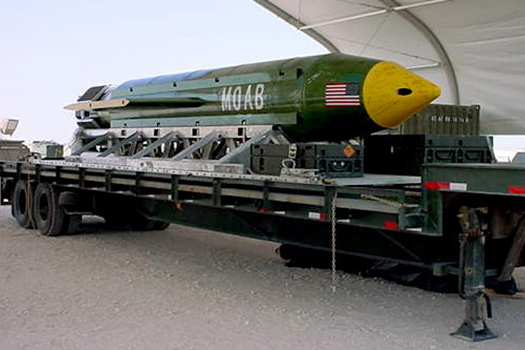
Israel has attempted in recent days to target Iran’s uranium enrichment facilities with limited success given that some are located beneath mountains. That’s where the United States comes in. President Trump appears poised to bet the farm on taking out the remainder of Iran’s uranium enrichment program using “bunker buster” bombs. Tactically, it may be possible. But that does not mean a war with Iran will come to a quick end.
A nuclear Pakistan has threatened to intervene on Iran’s behalf. China, North Korea and Russia are also allied with Iran. Tankers in the Straights of Hormuz, where roughly 20 percent of the world’s oil supply transits, have reportedly collided, bursting into flames as a consequence of jammed navigation systems.
If trade passages are blocked, all bets are off.
Direct conflict with Iran will undoubtedly plunge the global economy into a tailspin. A regional conflict in the Mideast will also destroy Trump’s Reagan-esque promise of a Golden Age. And while there are risks in any war, the difference here is twofold: First, 21st Century warfare now comes with autonomous, AI-controlled weapons against a backdrop of nuclear proliferation on a scale no one could have imagined at the end of WWII. Second, the world is up to its eyeballs in debt. The U.S., alone, accounts for $37 trillion of more than $100T globally. Already the U.S. spends more servicing the debt than on medicare and national defense. War will only hasten a national debt crisis.
Not Your Grandfather’s War
The world has arguably become too interdependent for brute-force solutions. “Minor incursions“, “surgical strikes” and “limited nuclear exchanges” are at best luxuries of ignorance and at worst tools of propaganda. Making decisions on matters of war and peace on the basis of media-driven “talking points” and “narrative” is equally misguided.
Time and time again, President Trump has gone against the grain, choosing to follow his instincts. But in the case of Israel and Iran, pressure to pursue regime change began in November when a former Bush administration official urged Trump to “crush Iran”. Setting aside expansion of the denuclearization goal to include regime change, nothing in war is guaranteed. An embattled Iran will have cause to redouble efforts to become a nuclear power, potentially with help from nuclear allies.
The larger miscalculation is that it may be too late to realize either goal.
The least forgivable of all possible outcomes is a return to Square One. After all, it has been reported for the better part of two decades that Iran is only weeks away from a nuclear bomb. By now, who is to say Iran does not already have nuclear weapons? If nothing more, Iran is likely capable of deploying dirty bombs. As such, even an incremental approach to assisting Israel runs the risk of fast-tracking global conflict to nuclear Armageddon. With the chess pieces already on the board where Russia-NATO are concerned — not to mention China-Taiwan, Pakistan-India and North Korea-South Korea — the risks cannot be underestimated.
If there is one thing the West should have learned from 20th Century conflicts, it is the fallacy of top-down solutions in response to another country’s internal problems. In this case, the world can and should stand in solidarity with the those who seek freedom. But the oppressed must lead their own fight for independence, just as the 13 colonies risked it all for American independence from the British monarchy 250 years ago. Why? Because in times of uncertainty, the devil one knows is often preferable to the devil one does not. From a civilian point of view, if the consequence of war is that the situation becomes worse before it gets better, the appearance of one’s liberator may be as frightful as one’s foe. After all, civilians know full well they can expect to become caught in the crossfire.
Above all else, war demands the capacity to expect the unexpected. It need not require the supernatural insights of a Brandon Biggs, however. Much can be understood in the context of basic human psychology. Outside threats have a way of galvanizing people around the very leaders that in less dire circumstances they are inclined to resist. Under all but the most horrific of circumstances — i.e. freeing concentration camp victims during World War II — regime change may be a tough sell. And in the event Iran already possesses nuclear weapons, removing the threat of a nuclear Iran may be a case of too little, too late, regardless.
These are not mistakes the United States and Israel can afford to make.
Problem, Reaction, Solution
What is the purpose of war, fundamentally? To bring an intractable situation to a head so that it can be resolved by brute force. In the Hollywood version of war, the “good guys” win. In the religious-prophetic tradition of war, God saves the faithful from destruction. In practice, war is akin to throwing a glass on the ground and watching it shatter. Broken glass informs future conflicts, not unlike the way in which Ukrainians waited ~85 years to avenge the starvation of nine million Ukrainians under Stalin’s rule during WWII.
When we contemplate why WWII was a decisive victory for the allies yet Vietnam, the Korean, Iraq and Afghanistan wars did not end in the same self-vindicating manner, the explanation is that war is rarely a noble affair. It is particularly ill suited to changing hearts and minds. This, however, has not stopped neocons, liberal interventionists and war hawks from entertaining delusions of regime-change grandeur. Like a gambler who can’t stop feeding money into a slot machine — or idealistic, young socialists who refuse to concede the horrors of 20th Century communism — interventionists are certain that if they “trust the plan” they will prevail.
The forever war mentality can be summed up in a single sentence: “When at first you do not succeed, try, try again”. This, unfortunately, is not far removed from another truism: “The definition of insanity is doing the same thing over and over again and expecting a different result”.
A Time to Choose
On June 14, 2025 millions of Americans united around a “No Kings Day” protest. And yet our problem is not “a king”. Our problem is a global establishment that refuses to stop enabling crisis after crisis. We saw the COVID-19 pandemic leveraged into talk of a Great Reset and climate lockdowns. The U.S. and NATO bankrolled a prolonged proxy war against Russia in Ukraine at the price of European security. With scarcely a pause, the Military-Industrial Complex continues to enter Mideast conflicts, one after the other, at the price of disillusion and destabilization.
For those who are of a mind to protest, it is time to think outside the box that is Donald J. Trump. No amount of media rhetoric makes Trump a “dictator” and his presidency will no doubt come and go. But some issues are transcendent. What has not changed, no matter the party in power, is the failed model of forced global integration — wars fought in the name of peace rather than peace as a means to deescalate conflict. Invariably, the justification is the same: Fighting a war now for the ostensible purpose of avoiding one later. At the end of the day, a war is still a war — and we still have a choice.
World War III can wait.
###
Sources
Eerie ‘Prophecy’ of Donald Trump Getting Shot in Ear Resurfaces | Newsweek
Trump Must Tell CIA To Overthrow Iran’s Leaders: Former Bush Official | Newsweek
Trump weighs joining Iran strikes after calling for ‘unconditional surrender’ | BBC
2005: Journalist: U.S. planning for possible attack on Iran | CNN
How Iran Entered the ‘Axis of Evil’ | PBS
AI’s ‘Oppenheimer moment’: Autonomous weapons enter the battlefield | The Guardian
Was Iran months away from producing a nuclear bomb? | BBC
Who are Iran’s allies? And would any help if the US joins Israel in its war? | The Conversation
Here’s what the Israel-Iran conflict could mean for the economy | News Nation
A world forever at war? Expert explains how the cost of global conflict equals China’s GDP | Express
The Israel-Iran Conflict and the Oil Market: Strategic Consequences | Rusi.org
‘Dirty Bomb’ Attack: This Could Be Iran’s Next Move Against Israel | American Enterprise Institute
 The Social Critic